NeoKakarot is a fanatic of JRPGs, anime, and DOTA with an especially soft spot for games by Nihon Falcom. You can follow Neo’s work via YouTube or Patreon.
Writes Neo after livestreaming a complete playthrough of FFV on YouTube (playlist here):
Final Fantasy V is often under looked or underrated and I too am guilty of overlooking this game, until today that is. This is my review of Final Fantasy V using my tried and true holy trinity reviewing system.
The video review is below, so check it out!
So, what do you think? Agree with Neo’s assessment of FFV? Comment below, or hit us up on Discord.
RoSoDude’s recent FF work includes comprehensive ATB enhancement mods for FFIX, FFVI, and FFVII. When not modding FF, RoSoDude is a PC gamer obsessed with systems design, and he’s worked on extensive balance modifications for Deus Ex (GMDX), System Shock 2, Prey, and Pathologic, with future plans to create mods for Dying Light and other games. You can follow these and other projects via RoSoDude’s blog, Discord, or YouTube.
Writes RoSoDude:
FF5’s Berserker is always slowest to engage the enemy, yet it has nothing to do with its Agility stat penalty. Rather, the Berserker (or any character under the zombie/confuse/berserk status) runs on its own ATB system, which can desynchronize with normal ATB under the following conditions:
Battle start, where Berserkers receive a noticeable penalty to initiative
Revival from death or removal of petrify status, upon which the Berserker can suddenly attack
Due to the slow status, which does not affect zombie/confuse/berserk characters as much as it should
These discrepancies are hidden from the player as the Berserker does not show its turn progression in the ATB gauge display, but they nonetheless impact the Berserker’s utility and make its behavior difficult to understand.
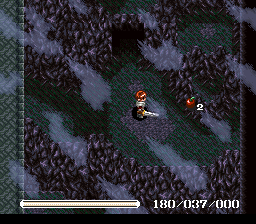
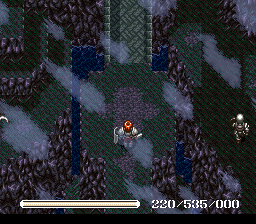
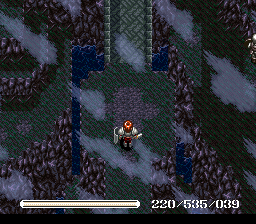
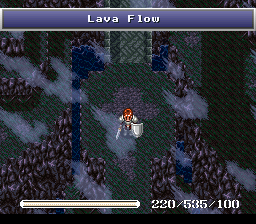
This patch aligns berserk ATB with normal ATB, such that the Berserker can gain first turn initiative in battle if they are built to overcome their Agility penalty, and they do not suddenly attack when revived or unpetrified. Berserk characters are properly hindered by slow, as are zombified or confused characters. Berserk characters reveal their turn progression in the ATB gauge display, while characters under the zombie and confuse status still have their true ATB hidden.
The patch incorporates/replaces Inu’s kiss of blessing exploit fix (for any hacks that use bit 6 on monster data 25). Source files for assembly are included as a reference for other modders.
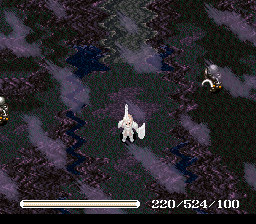
You can now get the patch via Romhack Plaza here or via RHDN here. For a preview, see below.
So, what do you think? Comment below, or check us out on Discord.
Rumbleminze, a fan of all things retro tech, is co-author of the Kid Icarus Randomizer romhack and whose recent work includes porting NES games to run natively on the SNES. You can follow these and other projects via Rumbleminze’s IA, Github, YouTube, or Ko-Fi.
Writes Rumbleminze, the port author, in his release post:
Excited to release version 1.0 of my SNES port of the NES game Life Force! A classic Konami Shoot-em-up, now with no sprite flicker, no slowdown, FIVE sick CD Quality soundtracks . . . 8 palettes, difficulty selection, and optional lives adjustment!
Cubear’s projects include the fan-favorite DressCode mod for Final Fantasy V, and numerous MSU-1 hacks including for Donkey Kong Country 2 and Live A Live, just to name a few. You can follow Cubear’s work via YouTube, X. or Patreon.
What is a hack? (game modification)
There’s hacks that adjust data, and there’s hacks that adjust code. (or code and data)
This document is about the latter. No shade on the former, it’s valid, but it’s not what I do so I can’t comment upon the process.
In essence, an ASM hack, assembly hacking, or whatever you want to call it, is a modification of the game’s internal code. You write a bit of code to accomplish a task, you insert it into the game, and voila! You’ve probably broken everything. Don’t worry, it’s normal and it happens to everybody.
All this sounds pretty simple, but it takes a bit of getting used to.. for instance, once your code is written, how do you get the game to run it? When?
Well, to get the game to run your code you’re gonna have to hook.
So what’s a hook? It’s a place in the code where something is working in a manner you desire, somewhere convenient, somewhere that runs when the function you are trying to alter is running, perhaps.
So let’s look at a sample bit of code…
PHA
ASL
TAX
LDA $3100,x
STA $3E
PLA
RTS
It doesn’t matter what this is doing or not doing. I wrote it at random to be roughly representative of code you might encounter in basically any 6502 game.
Let’s say the information in $3100,x or $3E were interesting to you. Maybe it’s a map load, or a song’s track number or a spell or item being used… whatever you want to change, you could change it here.
So let’s say that you’re changing the number, maybe only on a specific number, like the spell number 0x56, you want to replace with 0x6E, but otherwise let the values pass unchanged.
Your code might look like:
CMP #$56 Compare value in A with 0x56
BNE + Branch forward if it is not equal
LDA #$6E Load 0x6E into A
+ Branches merge here
All in all a pretty simple thing, but unless you tell the game to run your code, it won’t run it!
So now what we need is a hook.
On hooks:
In a ROM, every instruction is an array of bytes. Different instructions will be different sizes, in bytes.
For example, let’s look at where we’d like to hook.
Now, on SNES there are two different sizes of “hook”
(maybe 3 but we’ll ignore hooking with branches for now since they’re often impractical)
JMP, JSR are 3 bytes.
JML, JSL are 4 bytes.
Shifting bytes around in a ROM is a really hard task. So let’s not do it. Instead, we will overwrite the bytes in the ROM with new bytes.
So, from looking at where we want to hook, LDA $3100,x seems the smart place. If we can get away with a 3-byte hook, we replace just that one instruction, 3 bytes into 3 bytes, everything is great.
So let’s do it using JSR.. and you return from JSR with RTS.
In this way we can run a lot more code during those three bytes than the program originally intended.
Oh! but there’s a bit of a problem! We erased an instruction and it’s not being replaced! This means the game will NEVER perform the LDA $3100,x instruction. Let’s correct that. You almost always need to move the code you replaced in order to place your hook, you need to move it into your hook.
This will do exactly what we wanted to do in the first place. Compare the value being loaded from $3100,x with 0x56, if it IS 0x56, replace it with 0x6E, and if not, pass the loaded value through unchanged.
Perfect! But… what if there’s no free space in the same bank? What if we need to use 24-bit addressing, what if we need that 4 byte hook? (this will come up VERY often)
then it’s time to find 4 bytes to hook with.
We could hook 4 bytes with
TAX
LDA $3100,x
one byte + three bytes.. four bytes. Nice and simple. Just need to put TAX into your new code area as well.
Let’s say that’s not an option for whatever reason. What if you need a 4 byte hook but the things around only add up to 5 or 6…? for instance,
LDA $3100,x
STA $3E
That’s five bytes. If you replace 5 bytes with 4 bytes, the 5th byte remains and it will completely ruin your day. Luckily there’s a 1 byte instruction you can always overwrite dangling bytes with.
So the code we’re replacing got split up in our code block. This is just because we want to modify what was being written to $3E, so it needs to happen after our code, so it just goes at the END of our code space.
Alright so now that we know what a hook looks like, how do we write one for ASAR?
Well, now WHERE in the rom the code we’re replacing is is very important.
ASAR’s org instruction tells ASAR where to place code, so let’s say LDA $3100,x is in ROM at $C082CE
Our hook for asar looks like:
org $C082CE
JSL bankFAfree
NOP
and then we also need to tell ASAR where to put our new code, let’s say FA8000 is completely empty.
and that’s it. That’s how you hook with ASAR, that’s how you figure out where to hook, that’s everything about hooking to run your own code in a game. Apply your ASM with ASAR and it’ll insert your hook and your code for you.