For the Aflame family of mods, click here. For clymax’s projects, click here. You can also follow him on YouTube.
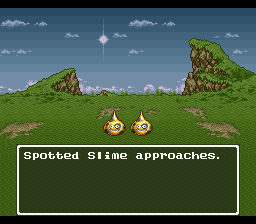
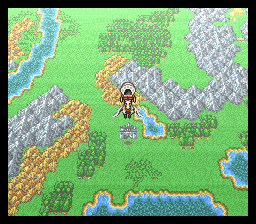
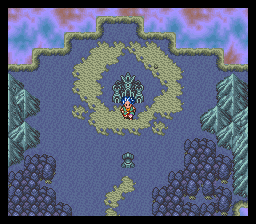
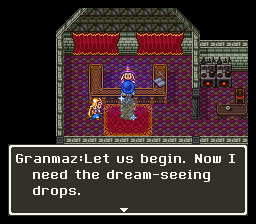
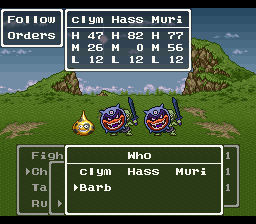
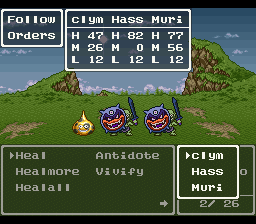
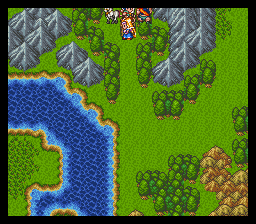
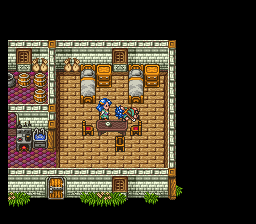
The Dragon Quest VI: Aflame respinner on SFC has been released courtesy of clymax. The mod is for use with Noprgress’s English fan translation v0.9 Beta 2.
The mod is unofficial and unaffiliated with Square Enix.
A respinner refers to an internal randomizer, as opposed to an external one, which we refer to as a repatcher.
With a respinner, simply reset the game to play a new randomization. Some respinners even let you play a vanilla game with enhanced QoL.
The dev build is available via our Whirlwind Fiesta event. For players who do not wish to join the event, do not wish to use Discord, or wish to support the hack author, early access is also available via Game Jolt.
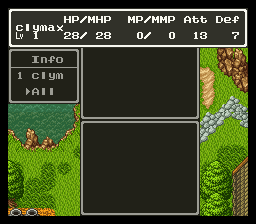
Provides a fix for the fan-translation softlock when canceling out of the Info-All screen in the menu.
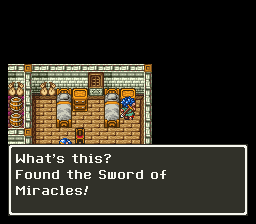
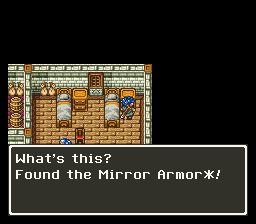
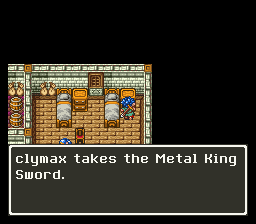
Items randomized. Duplicates can be rolled. Seeding not yet supported.
Save RAM has been expanded to enable this feature.
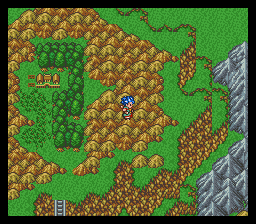
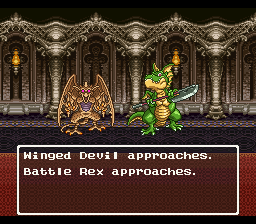
No more random encounters. Hold B to get random encounters (even when vanilla won’t give you any).
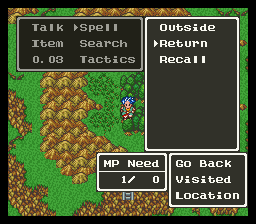
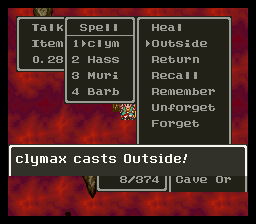
Return and Outside spells are given to start.
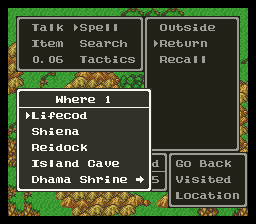
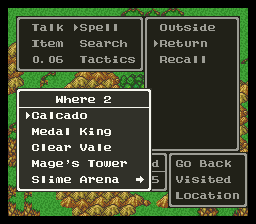
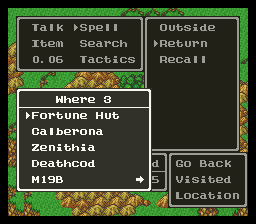
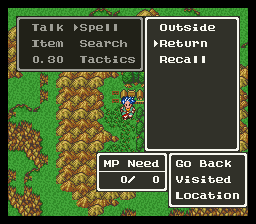
All destinations of the Return spell are given to start.
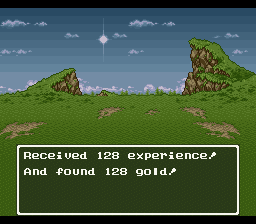
Gained experience and gold each boosted to 64x.
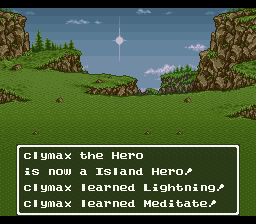
Vocation battles boosted to 32x.
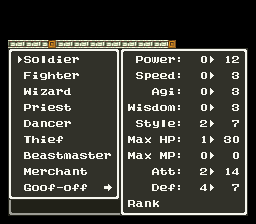
Removed level restrictions relating to vocation battles.
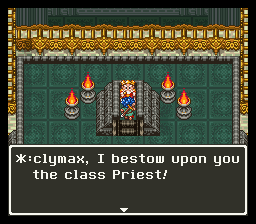
Dhama Temple restored from the start, giving you earlier access to vocations.
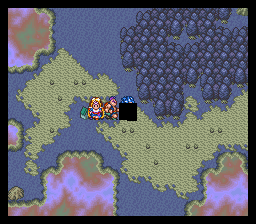
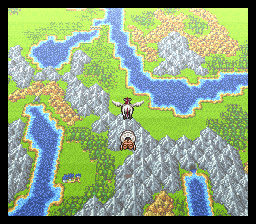
Reigns of Pegasus granted to start.
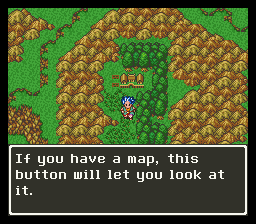
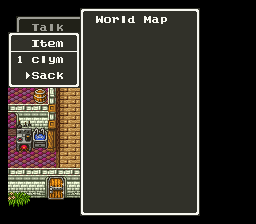
Map access enabled by default.
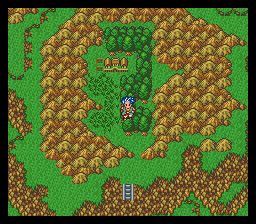
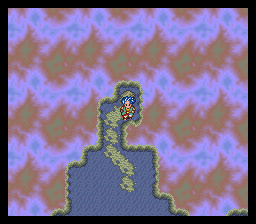
Dark World accessible from the start.
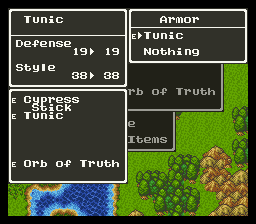
Orb of Truth is given to start as a convenience. This lets you access Deathtamoor’s island aside from using the Return spell.
Deathtamoor’s castle accessible from the start.
For now, Ende’s quest is ready to turn in so you can remove the Dark World curse.
Final Key and Prison Key are given to start as conveniences.
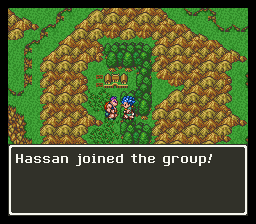
The first three party members are readily recruitable.
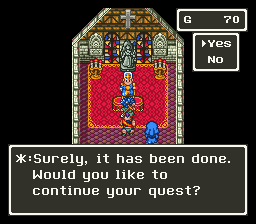
You can now choose between Chaos (Rando ON; default) or Order (Rando OFF) when configuring a save file.
Support added for manual seeding.
Final dungeon excluded from rando enemies. This allows endgame farming.
Added support for saving and loading the RNG state of the hack.
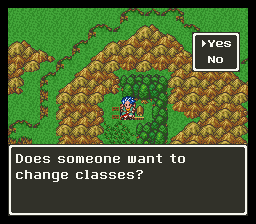
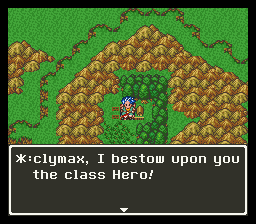
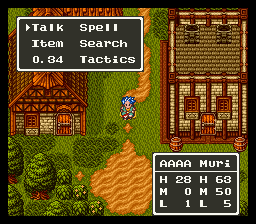
You can now change vocations anywhere by talking to yourself.
Dhama Temple no longer pre-restored.
Wagon now obtainable.
The fan-translation bug where you can target party members in the wagon has been fixed.
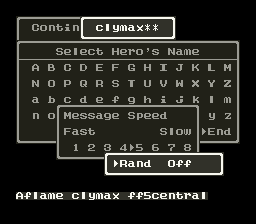
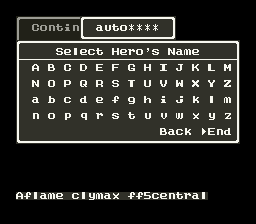
Support added for auto seeding. To use this feature, enter “auto” without the quotes as your character name.
Implements a workaround for the risk of a freeze when exiting out of the UI sequence for equipping via the Tactics menu in the fan translation.
Use Return anywhere.
Use Outside anywhere.
Intro has been skipped.
The MP cost of the Return spell has been reduced from one to zero.
Sack now given to start to avoid the sack becoming missable due to the hack’s new sequence breaks.
Provides a fix that prevents losing party members if you enter Deathcod without a wagon.
Skips all text-related delays.
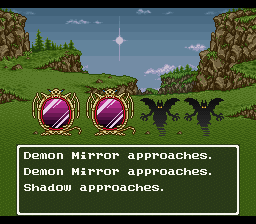
Holding the B button now gets you a random encounter when you take a step.
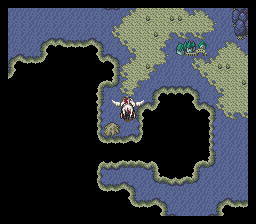
Flying speed doubled. Walking speed is doubled if you hold down the X button.
On the roadmap is a “Four-Job Fiesta” restricted-vocations challenge mode if player interest is sufficient.
Update: Fiesta mode implemented.
M19B has been removed from the list of destinations for the Return spell.
When starting a new game, you can now hold the Select button when the game starts to play the intro cutscene.
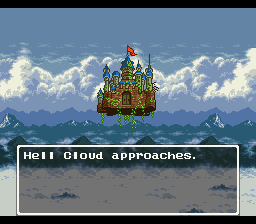
Regardless of your equips, you can now fight Hell Cloud when completing the puzzle to activate Zenithia.
Seed of Reasoning given to start for recruiting Amos.
So, what do you think? How do you think DQVI on SFC holds up today? Which DQ remains your favorite today? Comment below, or come check us out on Discord.
With Design Philosophies and Major Changes from Vanilla
solidification is a prolific creator of fan-made achievements across different game genres and especially in the world of Final Fantasy mods. You can follow solidification’s set-making journey here.
This post includes hacks for which solidification has created Retro Achievements sets. In other words, this post includes all notable hacks of Final Fantasy VI, with the exception of Brave New World, Return of the Dark Sorcerer, and T-Edition.
1. A Complete Hack
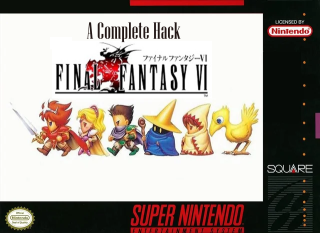
What is A Complete Hack?
Fundamentally, ACH significantly changes the story and characters and their progression. You learn spells through equipment and there is some attempt at having a robust class system (like FF1 or FF4) with some characters clearly meant for using magic vs. physically attacking (and they are indicated as such by their names).
Characters are MOSTLY faithful to their other-FF-game counterparts per their roles. But you won’t really find any superbosses here.
This is *the* hack that you don’t know about because you’re stuck on T-Edition.
New monsters? New bosses? Plethora of superbosses? Changed AI? Leo fully playable and an actually realized character who isn’t just “spam Shock lol”? New events? New sprites?
It has it all. This is a game for completionists and strategists; unlike T-Edition that basically will lock you into a certain party at the end game (and Tsushiy has admitted himself that he lost interest in the end of T, which is why you get locked into a specific party to deal with generic “hard” bosses that spam the same crap), this game really encompasses the spirit of modern-FF that started with FF6: you can make any party of your favorite characters and still win as long as you know how to play them.
On the completionist aspect, this game has tons of new bosses and enemies *and* a lot of unique equipment to steal or gamble at the Colosseum for that you won’t find anywhere else. And Lightning Hunter, the creator, is still modifying it, refining balance.
This is, in my opinion, the greatest FF6 hack we’ve ever seen and likely will ever see.
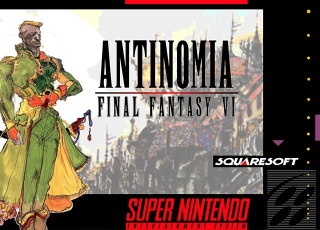
Antinomia, unlike Divergent Paths (in my opinion), both promises and delivers upon being a director’s cut. It includes Leo as a fully playable character, greatly expands everyone’s character and personalities while *feelilng* like they are true to how they were initially conceived (no ugly LiveJournal fanfiction nonsense here), and includes new story events that fit very strongly into how they would have most likely played out canonically.
This is mechanically largely unchanged from vanilla, so this is first and foremost a narrative expansion only, and in my opinion it is my strongest recommendation for people who want an expanded FF6 experience but don’t want to dive into the world of “all these hard bosses.”
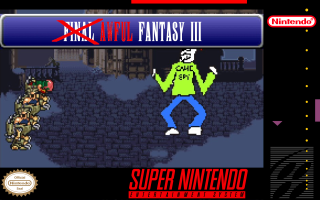
AF is basically a retelling of the “geek forum experience” from the early 2000s, relying on a LOT of humor and inside-jokes from that era across multiple forums. The most prolific, of course, being Something Awful.
Every single thing in this game has been changed, and there seems to be no particular rhyme or reason for anything other than “why not?” Some enemies auto-kill themselves, a new spell was intentionally programmed to include both the Relm Sketch bug and the Dischord bug all in one, every character has a superweapon, all sprites are different…
It’s actually quite the hacking feat considering tools were not super available back then and we English speakers didn’t see any real FF6 hacks that weren’t just bug fixes or those weird “super faithful to Japanese” transliterations.
The game will absolutely troll you (don’t open the trapped chest in the school or go right at the start of the game in the magitek armor) and makes no apologies for what it is.
BA Edition, or Balance Adjustment (or Boss Adjustments…), seeks to introduce *new* mechanics into FF6’s boss AI while significantly changing all of the bosses, making most every end-game boss a superboss of some sort. It also nerfs the characters to a degree (though Mog’s dances are significantly improved and why he is the chosen face for the icon).
This is probably the hardest of the FF6 hacks, comparable to Final Frontier, even for people fluent in Japanese as every single WoR boss has some gimmick that needs to be understood and you will be punished for not exploiting the gimmick. But even understanding the gimmick, you need to be smart or you will still be punished.
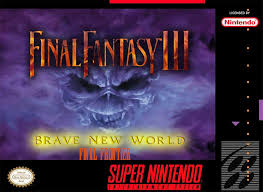
Final Frontier is a hack of Brave New World, which itself is a hack of FF6. In BNW, the goal is significant mechanical overhauls by giving everyone the same HP/MP growth (only their starting values differ) and relying on Esper Levels to improve stats, of which there are only so many levels and characters can only equip specific Espers. Other than the inclusion of Kaiser Dragon as a new boss (and a few new trapped chests), the game is basically a huge mechanical and balance modification.
Final Frontier puts that on steroids. It further limits inventory and levels, significantly improves the Stamina status (which in vanilla FF6 is useless but here it is the most important stat), modifies enemy AI to be highly aggressive and significantly different, introduces a lot additional minibosses (both in trapped chests and as random encounters), and is one of the hardest FF6 hacks out there. Its core design is “what is mechanically interesting? Include or modify it. What is not mechanically intereesting? Remove it.”
But other than the huge mechanical changes, it is fundamentally the vanilla experience in terms of narration/story.
This is a very old hack, one of the oldest for English audiences, that makes significant changes in the WoR. New dungeon areas and Cyan himself gets a full class change (which makes him almost essential for the final bosses) after completing his nightmare in WoR.
Enemy AI is a lot messier, however; end-game bosses spam instant party-wiping spells, forcing you to rely on Quick and Reraise/Life 3. You’re also very much glued to needing Terra and Cyan at the end-game because of the special equipment they get.
Most of the changes come from boss changes to be cameos from other FF games, and their AI reflects this.
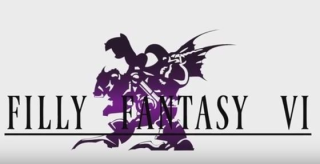
Filly is just a My Little Pony reimagining of FF6. It is clearly by fans for fans because it appears to have a very cohesive narrative (I am not part of the MLP community so I have no clue how faithful it is to the source). There is also a great emphasis on pony “types” and elements, as every pony character of a specific type can all equip the same stuff and rarely share equipment with other pony types, and a lot of spells have been modified to account for new wind/water/earth elemental spells, including in Rages and Lores.
But other than map changes, just about everything else here has been changed.
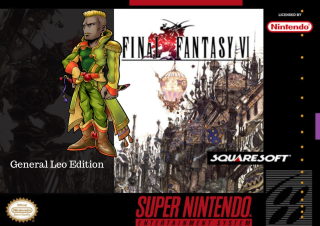
One of the oldest FF6 hacks, GLE replaces Shadow with General Leo, making him a fully playable character. Aside from a more faithful, less Woolsey, translation, that’s it.
Presentiment Era is a terrible hack wherein one guy basically bossed around Gi Nattak (the most prolific FF6 hacker and the brains behind Return of the Dark Sorcerer) to include this or that and added some trolling elements (enemy spam on Floating Continent, and the Marshal boss fight at the beginning of the game with Locke and Moogles that necessitated a [optional] nerf patch).
It’s meant to be a focus on Clyde before he became Shadow, but it is a half-assed hack that introduces ugly portraits, modifies a lot of dialog, and makes several characters homosexual as part of a larger trilogy of “interconnected” hacks across Chrono Trigger (this one is meant to bridge a gap between a CGI movie and an ending to a Chrono Trigger mod).
Expect a mess of abilities where almost everyone can Throw, enemies are unfair and come at you en masse, and the promises of expanded scenarios nonexistent. Otherwise, no real new inclusions/superbosses here.
Aside from the obvious art change, ReCast has a more focused story and narrative, removing a lot of the more open-ended aspects from vanilla (this is readily apparent in WoR that is now divided into scenarios).
No real superboss inclusions as it’s meant to be a more “alternate” FF6 rather than an expansion of its material.
Gogo doesn’t exist; instead, you get Banon, and Umaro is replaced with Biggs (but functions sort of similarly). Monsters don’t drop gold, but humans drop a lot more.
FF6 Reimagined is basically exactly what it sounds like; a reimagining of the development of FF6. There is significantly expanded lore and a few more consistently-approached map changes. There is a new Dragon Shrine end-game dungeon that is not the same as GBA’s Dragons’ Den (and the one here is a lot better in my opinion).
Shadow has a bigger presence in WoB and can even go to the southern continent if you want, and the two Dragons at Kefka’s Tower have been moved to elsewhere on the world map so they’re doable before touching the final dungeon. Every character has an ultimate weapon, too, and they’re needed to access the Dragon Shrine.
Mechanical tweaks include: no Esper level bonuses, new spells covering Wind/Water/Earth elements, balance tweaks for all the cast, Espers teach magic faster, and new Lores for Strago.
SPX, or Sparx, is a rebalancing of Japanese FF6 according to one user Sparx’s preferences. He intentionally sought to make the game significantly more challenging, including nerfing all the main cast and aggressively buffing all enemies. He also intentionally enhanced Strago’s capabilities (which is why he’s the icon face), and he sought to include a LOT of the GBA content, including the Dragons’ Den (…for an upcoming revision now that I’m more aware of it).
But this is very much a hard mode hack, even if you’re familiar with Japanese.